(0645)(0700)
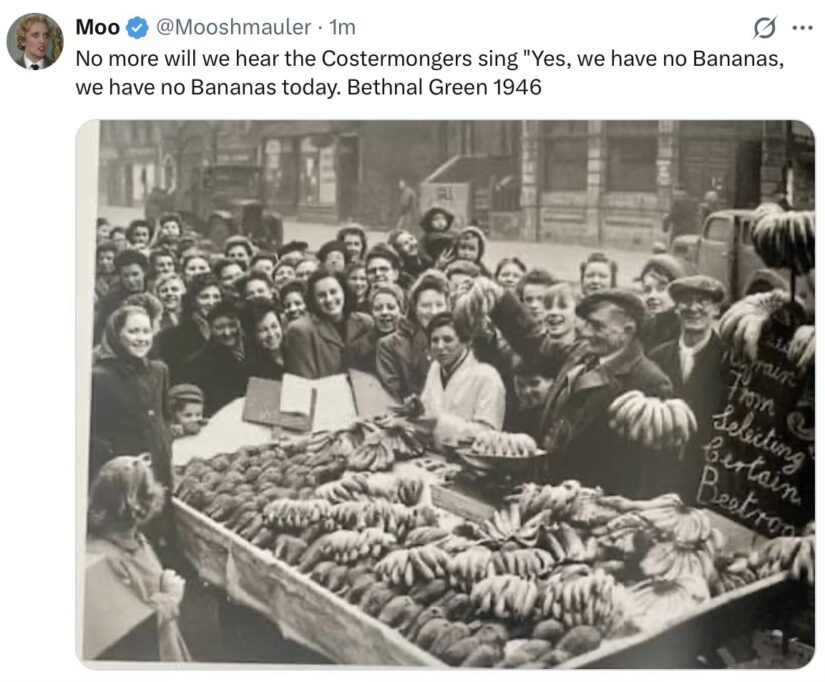
10. Moo corner
9. There’s been talk of Trump threatening the 4th Amendment
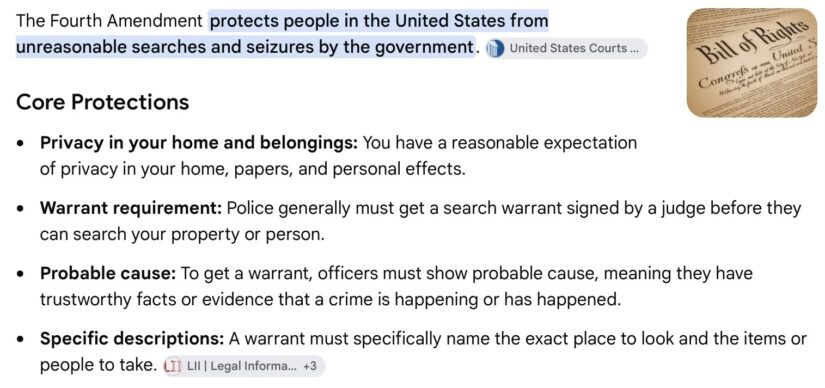
… but:
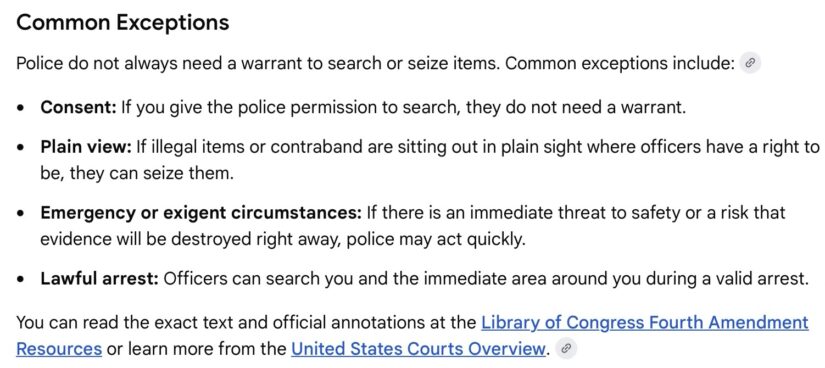
What Jeffries and the leftwing, the Demonrats, are making out is that ICE breaks the 4th.
8. In short, the politics of envy
… including hypergamy and feminazism.
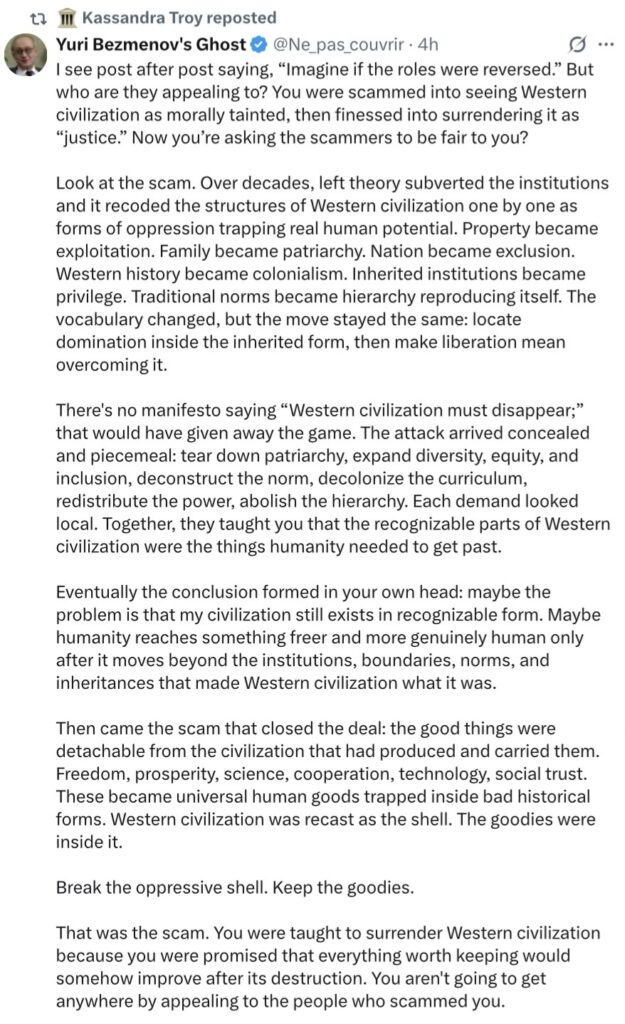
7. TPA
6. Artur Nadolny
THIS IS THE NEXT BIG UK SCANDAL You go to your bank for a loan. What you actually get is a bomb with a timer on it, and the bank keeps the detonator. That is the Hidden Credit Line scandalIt has been running since the 2000s. Here is how it worked.
Banks including NatWest (@NatWestGroup), Royal Bank of Scotland (@RBS_Help) and Ulster Bank (@UlsterBankNI) sold business owners what looked like an ordinary loan. Attached to it was an interest rate swap, marketed as protection if rates went up. What it actually did was build a hidden credit line into the deal, extra exposure booked against the customer’s own assets that they were never clearly told about.
When rates fell after 2008, banks used that hidden exposure to call in debts, strip assets and push profitable businesses into insolvency.
Two men refused to let this disappear. Steve Middleton (@stevemiddi1) and Mark Wright, a former RBS manager, built BankConfidential (@BankConfidenti1) to collect the evidence the banks hoped would stay buried. Mark Wright funded years of the work with roughly £60,000 of his own pension.
He also named the individual who taught bank trainees… … how to forge customer signatures. Neither man made a penny from any of it. Both watched their careers end for telling the truth.
In November 2022, Steve Middleton, Lord Prem Sikka (@premnsikka) and derivatives expert Ian Tyler sat down with the Financial Conduct Authority (@TheFCA) and showed the whole thing in detail … @thetimes journalist James Hurley (@jameshurley) had already written four separate articles calling it financial and accounting fraud, including what he described as theft from Ulster Bank fixed rate loan customers.
The FCA let NatWest mark its own homework, then concluded the fraud was not technically criminal fraud. A regulator investigating fraud and ruling that fraud is fine as long as nobody gets arrested for it.
In November 2025, BankConfidential published their full report, modestly titled the largest fraud anywhere ever. Five months later, on 14 April 2026, it forced a Westminster Hall debate led by John McDonnell MP (@johnmcdonnellMP), chair of the APPG on Investment Fraud and Fairer Financial Services (@appgonifandffs).
MPs read out the human cost. Catherine and Nigel Jarvis, told their losses were not foreseeable by a bank that had built those losses into the product from the start. Stephen and Gloria Lilley, personal guarantors on their own home, refused basic information about the size of the liability they were personally guaranteeing.
MPs asked for one thing, a fully independent judge led statutory inquiry under the Inquiries Act 2005. Before this request there had already been the Foskett panel, the Swift review, the Cranston review, the Tomlinson report, the Project Lord Turnbull report by Sally Masterton and a full parliamentary commission on banking standards. Six reviews, zero justice. This would have been the seventh.
Ian Byrne MP (@IanByrneMP) put it in blunt terms. He leads Parliament’s push for the Hillsborough law and knows what institutional cover up looks like from the inside. Ian Byrne said this scandal belongs on the same list as Hillsborough, the Post Office Horizon scandal and the infected blood scandal.
He also pointed out something …. FCA is a private company limited by guarantee. It has immunity from civil liability and can resist scrutiny in the courts.
A former FCA employee described its staff culture as the worst they had seen across a 40 year career. One case Byrne raised, Andrew Candy, was hit with a £70,000 break cost never disclosed to him, lost his business and his family home, then spent 17 years fighting for answers nobody gave him.
The government’s answer came from Economic Secretary to the Treasury Lucy Rigby (@LucyRigby). She told Parliament the FCA is independent, so ministers should be careful about interfering with its judgment.
AGAIN.. The regulator failed to regulate for over a decade, and the reason offered for not investigating that failure is respect for the regulator’s independence. That is like refusing to review a fire brigade because fire brigades are traditionally left to fight fires, even the ones they started.
Thousands of small businesses were quietly bled out through a product almost none of them understood and almost none of them were properly warned about. 2 whistleblowers gave a decade and a pension trying to fix it. Parliament asked for an inquiry. The Treasury offered a lecture on regulatory independence instead. Nobody has gone to prison… yet.
Sources: @stevemiddi1, @BankConfidenti1, @jameshurley, @thetimes, Hansard Westminster Hall debate 14 April 2026, @johnmcdonnellMP, @IanByrneMP, @appgonifandffs, @TransparencyTF, @TheFCA, @LucyRigby, @_moneymarketing .