(0915)(0915)
A bit of ancient history
Just an overview, all right, a first dive into the topics, later to develop (cunning plan).
Talmud
In antiquity, the two major centres of Jewish scholarship were located in Galilee and Babylonia. A Talmud was compiled in each of these regional centres. The earlier of the two compilations took place in Galilee, either in the late fourth or early fifth century, and it came to be known as the Jerusalem Talmud (or Talmud Yerushalmi).
Later on, and likely some time in the sixth century, the Babylonian Talmud was compiled (Talmud Bavli). This later Talmud is usually what is being referred to when the word “Talmud” is used without qualification. Traditions of the Jerusalem Talmud and its sages had a significant influence on the milieu out of which the Babylonian Talmud arose.
Babylonian captivity
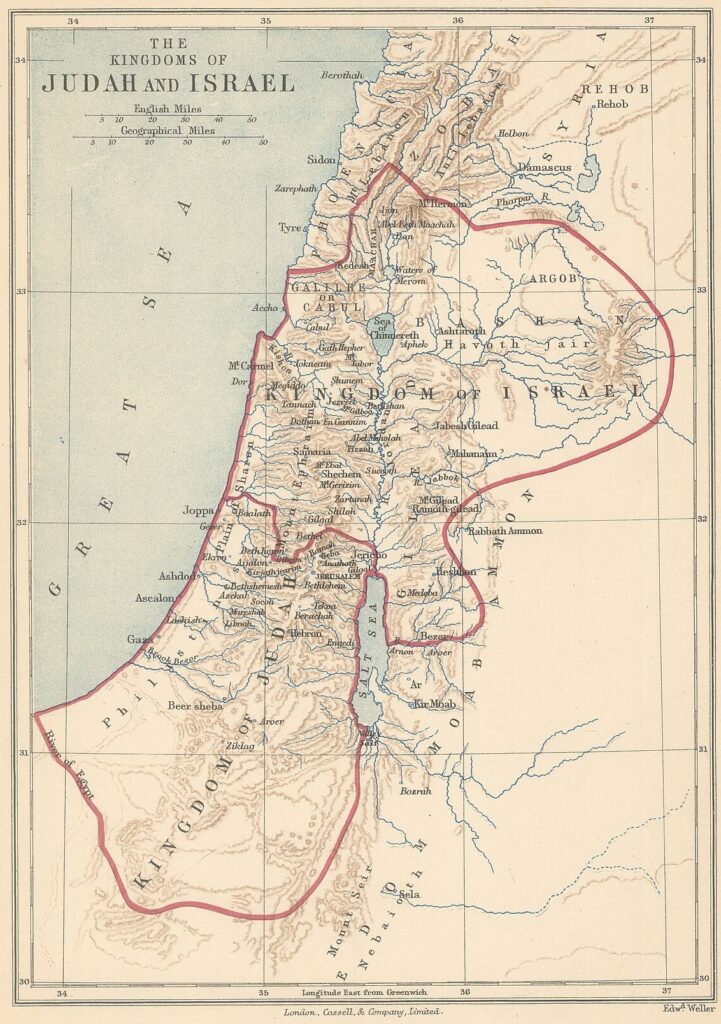
The northern Kingdom of Israel was destroyed around 720 BCE, when it was conquered by the Neo-Assyrian Empire. While the Kingdom of Judah remained intact during this time, it became a client state of first the Neo-Assyrian Empire and then the Neo-Babylonian Empire. However, Jewish revolts against the Babylonians led to the destruction of Judah in 586 BCE, under the rule of Babylonian king Nebuchadnezzar II. According to the biblical account, the armies of Nebuchadnezzar II besieged Jerusalembetween 589–586 BCE, which led to the destruction of Solomon’s Temple and the exile of the Jews to Babylon; this event was also recorded in the Babylonian Chronicles. The exilic period saw the development of the Israelite religion towards a monotheistic Judaism.
The exile ended with the fall of Babylon to the Achaemenid Empire c. 538 BCE. Subsequently, the Achaemenid king Cyrus the Great issued a proclamation known as the Edict of Cyrus, which authorized and encouraged exiled Jews to return to Judah. Cyrus’ proclamation began the exiles’ return to Zion, inaugurating the formative period in which a more distinctive Jewish identity developed in the Persian province of Yehud. During this time, the destroyed Solomon’s Temple was replaced by the Second Temple, marking the beginning of the Second Temple period.
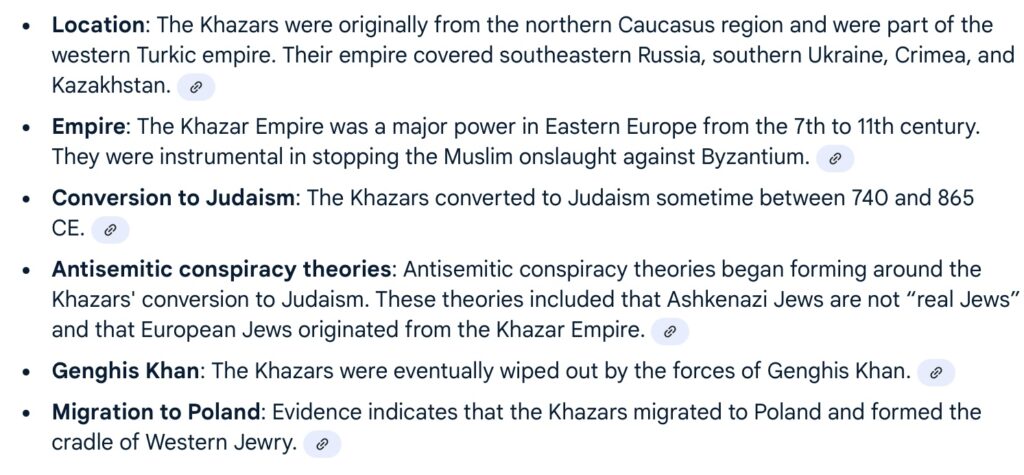
Khazars

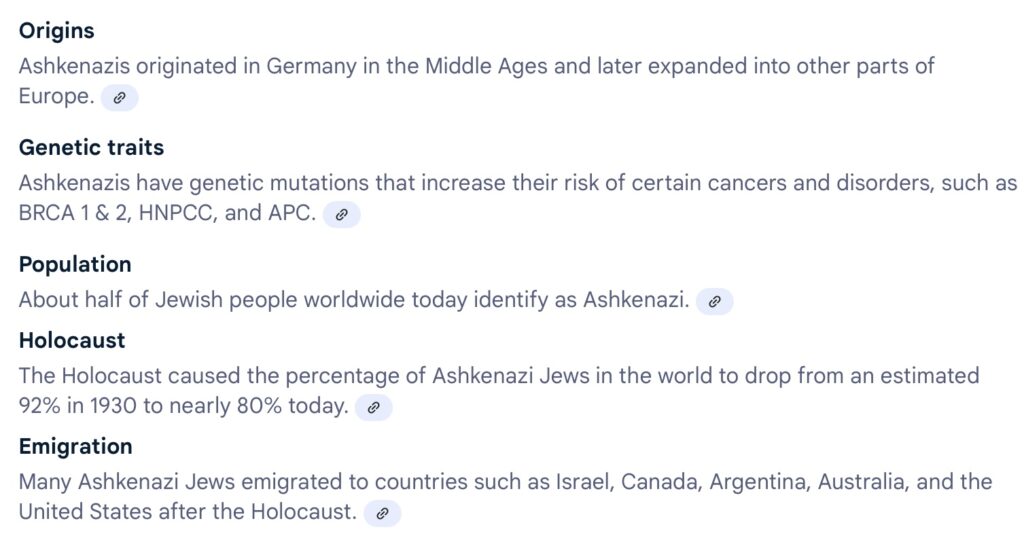
Ashkenazis
Nephilim
The Nephilim are mysterious beings or people in the Bible who are described as being of great strength and size. They are mentioned in the Hebrew Bible, also known as the Christian Old Testament, in the books of Genesis, Numbers, and Ezekiel.
The word “Nephilim” is sometimes translated as “giants” or “the fallen ones”. The identity of the Nephilim is debated by scholars and theologians. Some possible interpretations include:
- The Nephilim were the offspring of angels and humans, resulting from the “taking of wives” in Genesis 6.
- The Nephilim were the children of males from the line of Seth and females from the line of Cain.
- The Nephilim were called Nephilim because they “fell short” of their fathers in some way.
Some say that the Nephilim were similar to the demigods of the Greeks
Morning, Sir!
Here’s some new ( to me) takes on the Nephilim. As I understood it the meaning was uncertain and I was taught by a Biblical scholar in my yoof not to surmise or if you don’t know, say so and don’t assume because you could be led astray or lead others astray.
Make of this what you will. Btw, giants are in the lore of many countries worldwide. Some believe they were formed by the union of visitors from outer space and human female abductees. Some believe it was the beautiful long hair of the women which first attracted them which is why women were told to cover their hair. 🤷♂️
https://www.abarim-publications.com/Meaning/Nephilim.html
……
JH: As always, IYE, it’s who these sources actually are which counts, more than what they say. What is the background of both. I need to explore that first. For example:
Abarim (Hebrew: הָעֲבָרִים) means “regions beyond,” “passages,” or “crossings,” coming from the root verb ‘ābar (עָבַר), which means to pass over or cross over…
“ BDB Theological Dictionary adds a very interesting note, although, in its signature grumpy style, pronounces any etymology ‘dubious’ and ‘precarious’: The words for Nephilim, נפילים and נפלים bear a striking resemblance to Nephila, the Aramaic word for Orion: ניפלא and נפילא.
Ergo: the Nephilim are also the Orionids.“
Probably why some believe the N are space aliens.😳
……
JH: The BDB, or Brown-Driver-Briggs Hebrew and English Lexicon, is a standard reference dictionary for biblical Hebrew and Aramaic. First published in 1906, it was created by scholars Francis Brown, Samuel Rolles Driver, and Charles Augustus Briggs.
Still does not say who they were … the new RS Secularists? I need to find out.
Charles Augustus Briggs (January 15, 1841 – June 8, 1913[1]), American Presbyterian (and later Episcopalian) scholar and theologian, was born in New York City, the son of Alanson Briggs and Sarah Mead Berrian. He was excommunicated from the Presbyterian Church for heresy due to his liberal theology regarding the Bible.[2]
Liberal theology … the new secularism or radical (meaning back to the roots)?
https://www.encyclopedia.com/people/philosophy-and-religion/protestant-christianity-biographies/charles-augustus-briggs
Bill
Maybe just me but if the khazars were “wiped out by “the forces of Ghengis Khan” (from my research ino this figure he is at best an obfuscation of someone who lived and died. At worst mythical invented by jesuits.) how could they migrate to Poland?
To the best of my knowledge the dead cannot walk.
Bill
……
JH: Except in film, Bill.