7. It’s said that nothing stays The same, with claims that it’s in the name of progress, though whether that is true or mot, I have my doubts. First of all, the Police recruiting system seems to have changed, and perhaps Jaded, or others, can identify some of the following.
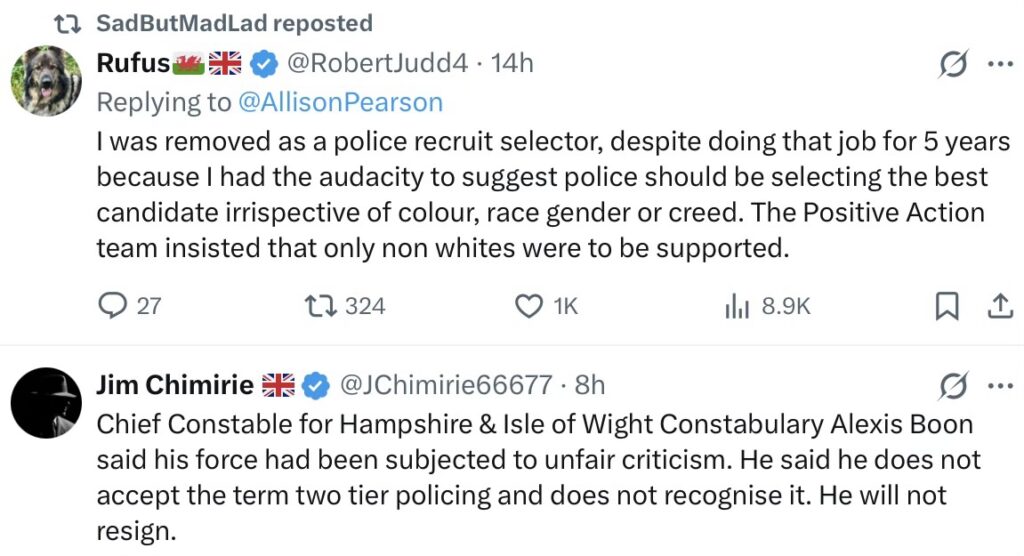
The system of recruiting for the Police seems to have changed a great deal since my attendance, in the early 80’s, for assessment (a 3 day period where the applicants are interviewed, being put into no win situations to see how you dealt with them, or being given 10 minute talks about yourself and why you want to become a Police officer). There were 12 applicants in my group, male and female, and not all white. At the end of the 3 days, there were 6 of us, including 2 females and a lad with Ghanian heritage. University students and a semi-professional rugby player had left. A week at the Force HQ being fitted for uniforms, etc, was followed by 10 weeks at a Police Training Centre, with numerous other Police recruits. We were never called PC or Officer until we proved that we had successfully completed the course. It was always Mr or Miss. As well as being taught, and regularly tested on criminal law, there were periods of discussion on race, sexual bias, and personal experiences We were constantly put under pressure, assessed and, if it was felt we would not meet the required standards, our home Force would be notified. Not all members of my class made the 10 weeks. A week back at Home Force HQ learning local procedures, then posted to your Police station to begin your career, which started with a 2 year probationary period, during which you could be asked to leave of it was felt you weren’t suitable. A Tutor Constable (some Forces called them puppy walkers) spent several weeks with you, attending as many different incidents as possible in that time, to give you experience during which any failings were noted and addressed. Three monthly reports by the shift Sgts or Inspectors were sent to HQ. At the end of those 2 years, you were confirmed in your appointment as an Officer of the Crown, and your career began in earnest and you began learning your trade. How much this has changed I have no idea but, taking into account how much society has changed, perhaps that aim of progress is subjective?
The tragedy of the death of Henry Nowack, and the manner in which he died, has been followed, and commented on, by nearly everyone. Personally, I can’t comment as I wasn’t there; I have no idea of the level of training, or the length of service of the officers; and only 3 of the apparently 50 odd minutes the Police officers were at the scene seem to have been scrutinised. There may be other factors involved including the phone call, allegedly, by a member of the defender’s family reporting a racial attack on him. Was this made after contact by the offender to obtain a form of alibi? Again, I have no idea, but no doubt this was one avenue explored.
I am proud of my service to the Crown as a Police officer, and know how difficult that job can be, just as I am proud of my Army service, again having been in difficult situations.
No matter what happens now, the only facts we can obtain is that two families have been destroyed and the public’s perception and trust in the Police is, once again, at an all time low. There are no winners.
I apologise for the length of this, and accept that my contribution is from an ordinary bloke who, during his lifetime, found himself in extra ordinary situations.
I also apologise for misspellings and predictive text changing the preferred words (which I missed when reading it through – understandable when a Kindle is being used).
……
Greatly appreciated, Penseivat and it is certainly soon to be run. My question of myself and you is which is the most effective way. I’m thinking Friday’s a good day for it.
Thanks for this. One thing I perhaps should have mentioned was that I was taught not to accept things as they first appeared, to question, and not necessarily believe what told at first. Also, everyone to be treated in an equal manner, though there were often those who tried to circumvent the course of justice on the grounds of their race, sex, or societal position. Whether DEI has altered that, I have no idea. Good luck in putting this into a legible manner.
No 6. Superb.
7. It’s said that nothing stays The same, with claims that it’s in the name of progress, though whether that is true or mot, I have my doubts. First of all, the Police recruiting system seems to have changed, and perhaps Jaded, or others, can identify some of the following.
The system of recruiting for the Police seems to have changed a great deal since my attendance, in the early 80’s, for assessment (a 3 day period where the applicants are interviewed, being put into no win situations to see how you dealt with them, or being given 10 minute talks about yourself and why you want to become a Police officer). There were 12 applicants in my group, male and female, and not all white. At the end of the 3 days, there were 6 of us, including 2 females and a lad with Ghanian heritage. University students and a semi-professional rugby player had left. A week at the Force HQ being fitted for uniforms, etc, was followed by 10 weeks at a Police Training Centre, with numerous other Police recruits. We were never called PC or Officer until we proved that we had successfully completed the course. It was always Mr or Miss. As well as being taught, and regularly tested on criminal law, there were periods of discussion on race, sexual bias, and personal experiences We were constantly put under pressure, assessed and, if it was felt we would not meet the required standards, our home Force would be notified. Not all members of my class made the 10 weeks. A week back at Home Force HQ learning local procedures, then posted to your Police station to begin your career, which started with a 2 year probationary period, during which you could be asked to leave of it was felt you weren’t suitable. A Tutor Constable (some Forces called them puppy walkers) spent several weeks with you, attending as many different incidents as possible in that time, to give you experience during which any failings were noted and addressed. Three monthly reports by the shift Sgts or Inspectors were sent to HQ. At the end of those 2 years, you were confirmed in your appointment as an Officer of the Crown, and your career began in earnest and you began learning your trade. How much this has changed I have no idea but, taking into account how much society has changed, perhaps that aim of progress is subjective?
The tragedy of the death of Henry Nowack, and the manner in which he died, has been followed, and commented on, by nearly everyone. Personally, I can’t comment as I wasn’t there; I have no idea of the level of training, or the length of service of the officers; and only 3 of the apparently 50 odd minutes the Police officers were at the scene seem to have been scrutinised. There may be other factors involved including the phone call, allegedly, by a member of the defender’s family reporting a racial attack on him. Was this made after contact by the offender to obtain a form of alibi? Again, I have no idea, but no doubt this was one avenue explored.
I am proud of my service to the Crown as a Police officer, and know how difficult that job can be, just as I am proud of my Army service, again having been in difficult situations.
No matter what happens now, the only facts we can obtain is that two families have been destroyed and the public’s perception and trust in the Police is, once again, at an all time low. There are no winners.
I apologise for the length of this, and accept that my contribution is from an ordinary bloke who, during his lifetime, found himself in extra ordinary situations.
I also apologise for misspellings and predictive text changing the preferred words (which I missed when reading it through – understandable when a Kindle is being used).
……
Greatly appreciated, Penseivat and it is certainly soon to be run. My question of myself and you is which is the most effective way. I’m thinking Friday’s a good day for it.
Thanks for this. One thing I perhaps should have mentioned was that I was taught not to accept things as they first appeared, to question, and not necessarily believe what told at first. Also, everyone to be treated in an equal manner, though there were often those who tried to circumvent the course of justice on the grounds of their race, sex, or societal position. Whether DEI has altered that, I have no idea. Good luck in putting this into a legible manner.