(1530) As we move into the heavy end of the day. (1549)

Steve and the Strait of Hormuz
When the bombing stops all eyes will be on this strip of water..
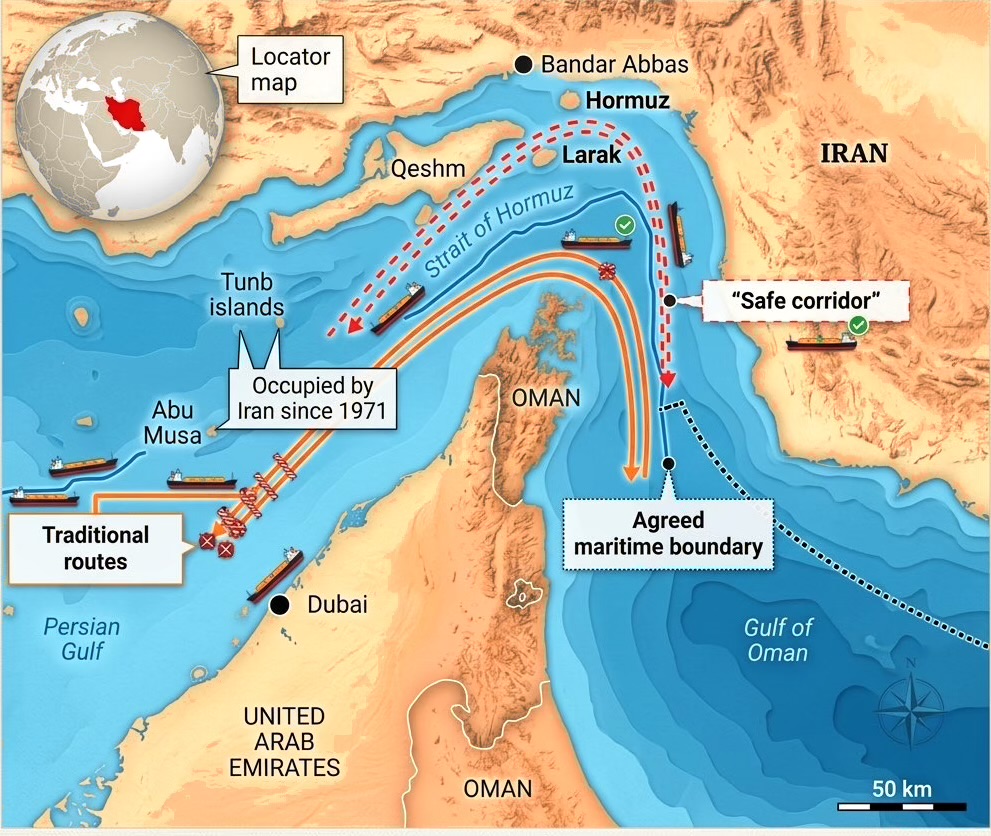
Larak Island is a small, rugged Iranian island in the Persian Gulf, located just off the coast of Qeshm. While it is known for its pristine beaches and natural beauty, its true importance lies in its strategic military role and its position as a “choke point” for global trade.
Larak’s significance is defined by its geography and its heavy militarization by the Islamic Revolutionary Guard Corps (IRGC): Strategic Choke Point: Larak sits at the narrowest part of the Strait of Hormuz, just 24 miles (39 km) from Omani territory. Because nearly 20% of global oil production passes through this strait, Larak serves as a primary monitoring and “enforcement” hub for all passing vessels.
The “Tehran Toll Booth”: As of March 2026, the IRGC has established a “safe corridor” for approved shipping that routes vessels through Iranian waters near Larak. Reports indicate some vessels pay nearly $2 million for safe passage, with IRGC forces on Larak conducting inspections and visual verifications of cargo.
Military Stronghold: The island is a fortified outpost equipped with: Anti-Ship Missiles: Fast-attack boats and mobile missile launchers can target ships within minutes.
Electronic Warfare: It houses Russian-made Tirada-2s systems designed to jam satellite communications (SATCOM) and disrupt naval navigation.
Air Defense: The island features layered air defense networks to protect these strategic assets. Energy Infrastructure: Historically, Larak has served as a major oil export and transfer point. During the Iran–Iraq War, it was a frequent target of Iraqi bombings due to its floating oil terminals.
Despite its military status, Larak is a “hidden jewel” for travelers seeking peace and nature: Bioluminescent Planktons: The island is famous for its “magical blue light” at night, caused by bioluminescent plankton hitting the shores.
Coral Reefs: Its waters host 37 species of scleractinian corals, making it a prime spot for diving and snorkeling.
Portuguese Castle: Built in the 16th century, this historic stone fort remains one of the largest colonial relics in the Persian Gulf