… by “the young Scot” as I call him. You can call him a young Scot apologetic if you like … he’s been roundly criticised and applauded by roughly equal numbers.
The first obvious enemies are going to be the Dawkins types, inc. university academics (I know them well), also dark arts uppities such as masons, the illumined, euroroyals, black nobility, fabians, other nations e.g. China, Arabs, Babylonian Israel (Rothschilds, Sabbateans, Franks), the Venetian push (see La Rouche) … there are just so many baddies who would attack.
My reply to those who say there was no Moses, no Abraham, no Noah, it’s all just a ruse by one ethnicity from ancient times … is ok, where are your receipts, your final proof? Because I see plenty of evidence for much of it, inc. Egyptian, Assyrian, Babylonian et al. Why should you frame the argument your way? I’m framing mine based on a lifetime of reading too.
What I like about the young Scot, his choice of bible excepted, is that he does seem straight, exploratory … as I am. You see, I did not come to my view by some instant Damascene moment … I had one at 12 but then largely went off and lived the same life as most westerners, at one point a naughty boy, trying this and that, partial to the female.
But where my mates so easily fell into what I call the Royal Society, Fabian hegemony, zeitgeist (so academically respectable, so politically correct), I stood at a distance and said why on earth are all these documents not documents? They very much are, just as much as Enoch. For a purpose? For sure. But a Sherlock Holmes would try to clear his mind of a priori prejudice, long enough to read as dispassionately as possible.
The young Scot has simplified for his viewers, yes … e.g. the Semiramis, Nimrod, Tammuz tale, the story of Ur and Uruk, the ziggurats … but why not? He’s read quite widely, whereas Colonel Harrumph types, professional atheists, have done diddly squat by comparison … they’re just not interested.
Which eventually comes down to “old wives’ tales”, myths, legends … what is a “myth” after all? Is it not a history which the hegemony rejects at the time? What of Oz aborigine Dreamtime? People made what sense they could of the things they encountered … astrology, alchemy, annunaki. But there’s been a consistency all the same, from ancient times, much from oral tradition, then written. Dead Sea scrolls? Piltdown Man?
Do I buy Joseph of Aramathea in what is now England? Why not … but also why? We know why Blake wanted it. And Yeats across the ditch wanted his Celtic identity. Also, do you trust a Scot from the home of paganism? Goodness, even the bleedin’ Scottish Rite is seated up there. Which in turn is Templar. And if we’re starting on that … then we’re also talking Franks, Welfs, Third Temple, Genoa.
A huge bleedin’ field, innit? Were you born back then with total knowledge of all things at all points of history? Excuse me if a slight smile appears at the corner of the lips and a sparkle in the eyes. Where’s the humility of the scholar gone?
Lastly from me just now … why would youtube uploaders who are capable of clips of any length from any openly available movie … find it so difficult to run the most important scene in the movie imho? 12 bleedin’ seconds in one upload only from a major movie? Why? Why so constrained and curtailed on youtube?
Or put another way:
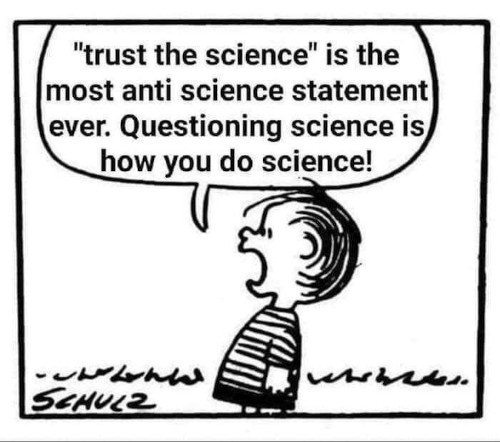

As with all stories it comes down to trust in the interpretation of the evidence and how veracity of evidence is determined by oneself.
The forms of evidence are speech, writing, drawing and the physical. Dreams may be another form but the experiences of dreams are within not without.
Or one knows the story and any evidence presented as true.
The instant something travelling through time orally gets replaced by something written down its open to fraud and fakery either deliberate, accidental or just for fun.
Of course the oral retelling from human to human is open to the same temptations but I argue the core message endures far more robustly than it does once written.
Translations of both speech and writing are areas where “getting it wrong” are legion. Things get misinterpreted, left out, put in or simply made up because there is no equivalent word in both languages.
Meaning is the thing most often lost in translation and meaning is the most important part of the message.
Add in word sliding, words going out of use, new words being invented, words whose definitions change from location to location, pronunciation changes, spelling changes and establishing veracity of anything spoken or written comes down to the individuals singular trust and perception.
If one doesn’t know but suspects then belief arises. Knowing cannot be manipulated belief can.
Belief disappears the instant knowing arises.
When you seek an enemy it will find you.
……
JH: Good point, Bill:
“As with all stories it comes down to trust in the interpretation of the evidence and how veracity of evidence is determined by oneself.”
There is also the evidence of ages which defies convenient personal pigeonholing.
Please expand upon what you regard to be the evidence of ages for I do not understand.
……
JH: Bill, you have just put the classic but endlessly circular argument and I’d like others not drawn into it … your reply here is in reply to yourself, so rhetorical, but I’m still going to respond in Wed 11, then include that post on the Policies page. Nothing whatever wrong in asking it … I’ll reply in kind.
Also, it is in no way anything to do with Bill … he just jogged the memory now that I needed to include such a thing on the Policies page.
Simply asking you to explain your term ages in the context of evidence nothing more nothing less as its something I have never come across before.
……
JH: Bill, the post is not about you, it’s one for a long time I needed to do and it jogged my memory.
“Evidence of ages” means evidence in oral and written tradition over a very long time, many millennia.
“Evidence of ages” means evidence in oral and written tradition over a very long time, many millennia.
Thank you. Most kind. I appreciate it.