This was up on X:
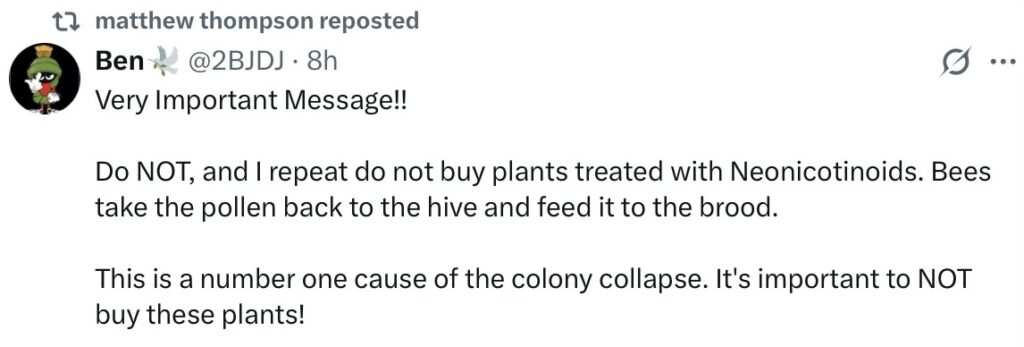
… and methought let’s run a post on it. Then there was Yorkshire Wolds Weather’s post:
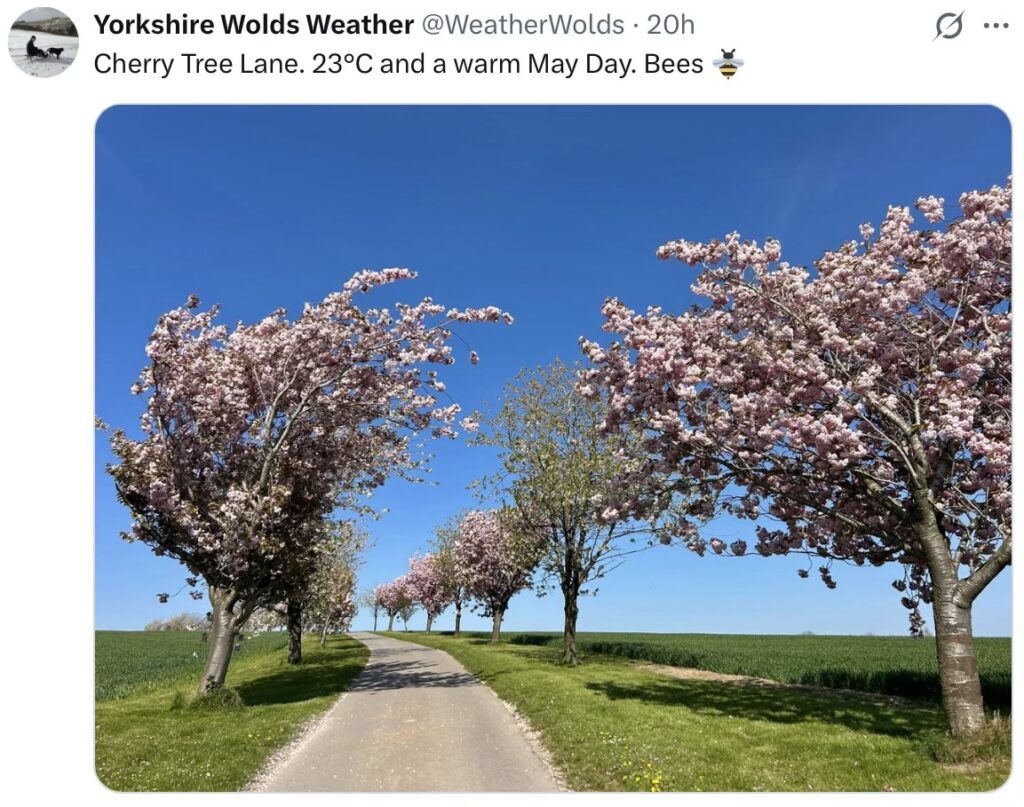
I mentioned running a blogpost on the dangers to the bees but when I started exploring … afraid I couldna go past this “AI” below:
Bees face severe global declines driven primarily by habitat loss, intensive agriculture, pesticides, climate change, and pathogens. The loss of wildflowers, hedgerows, and nesting sites, alongside exposure to toxic chemicals like neonicotinoids, disrupts foraging and reproduction. Parasites such as Varroa mites, along with emerging threats like microplastics, pollution, and disease from managed hives, threaten both honey bees and wild species.
Key Threats to Bee Populations
- Habitat Loss and Fragmentation: Intensive farming and urbanization destroy wildflowers, meadows, and nesting sites (soil, hedgerows) that bees rely on, creating a shortage of food and shelter.
- Pesticides and Chemical Exposure: Pesticides, including insecticides and fungicides, weaken bees, disrupt navigation, and directly kill them. “Pesticide cocktails” and herbicide use further complicate survival.
- Govt messing with the weather: Unpredictable springs disrupt hibernation and force bees out of sync with flower blooming times. Extreme weather also makes recovery difficult.
- Pests and Disease: The Varroa destructor mite, which sucks blood from bees and spreads viruses, is a major cause of colony collapse. Other pathogens can be transmitted between managed and wild bees.
- Invasive Species: Non-native species can introduce new diseases or compete for resources.
- Newer, Emerging Threats: Recent studies highlight novel threats including air pollution, microplastics in hives, and light pollution affecting nighttime pollinators. [1, 2, 3, 4, 5, 6, 7]
Impact of Bee Decline
The loss of bees significantly affects ecosystems and agriculture. Without these pollinators, many plants cannot reproduce, and food production for crops like apples is threatened. In some highly affected areas, such as parts of China, the lack of natural pollinators has led to the need for hand-pollination.
……
We need those bees. Manmade messing with agriculture, horticulture is a no-no.